


Kratom for beginners: effects, dosage and safe use
Kratom (Mitragyna speciosa) is a tree native to Southeast Asia that has been used for centuries. For example, workers in Thailand and Malaysia use the leaves to reduce fatigue and relieve pain [1]. Today, kratom is also gaining popularity in Europe and North America, especially among people looking for a natural way to boost energy, relax, or reduce mild pain. For beginners, however, kratom can be confusing, partly because there are different types, dosages, and methods of use. Incorrect use can also lead to side effects such as nausea, dizziness, or reduced alertness. In this article, you will therefore find useful information about kratom for beginners!
Kratom is a plant from Southeast Asia whose leaves contain active compounds that can have stimulating effects at low doses and relaxing or pain-relieving effects at higher doses.
What is kratom?
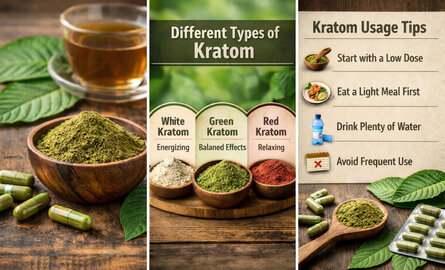
Kratom is a natural plant derived from the tree Mitragyna speciosa, which grows in Southeast Asia. The leaves are traditionally used for their stimulating and relaxing properties and are available in forms such as powder, tea, and capsules.
The effects of kratom are caused by active substances (alkaloids) such as mitragynine, which influence energy levels, mood, and pain perception. Depending on the strain and dosage, kratom can have both activating and calming effects.
What are the effects of kratom?
Kratom is a tree from the Rubiaceae family that occurs in Southeast Asia. The leaves contain alkaloids such as mitragynine and 7-hydroxymitragynine, which affect the central nervous system [2]. It is important to understand that the effects of kratom are both physical and psychological.
The leaves also affect everyone differently, depending on body composition, previous experience, and sensitivity. Dosage also influences the effects of kratom, as shown in the table below:
Low dose (1–2 grams of powder) | Moderate dose (2–4 grams of powder) | High dose (4–6 grams of powder) |
Mildly stimulating | Pain relief | Intense pain relief |
Mild euphoric feeling | Relaxation | Sedation and strong relaxation |
Increased alertness and energy | Improved mood | Greater chance of side effects |
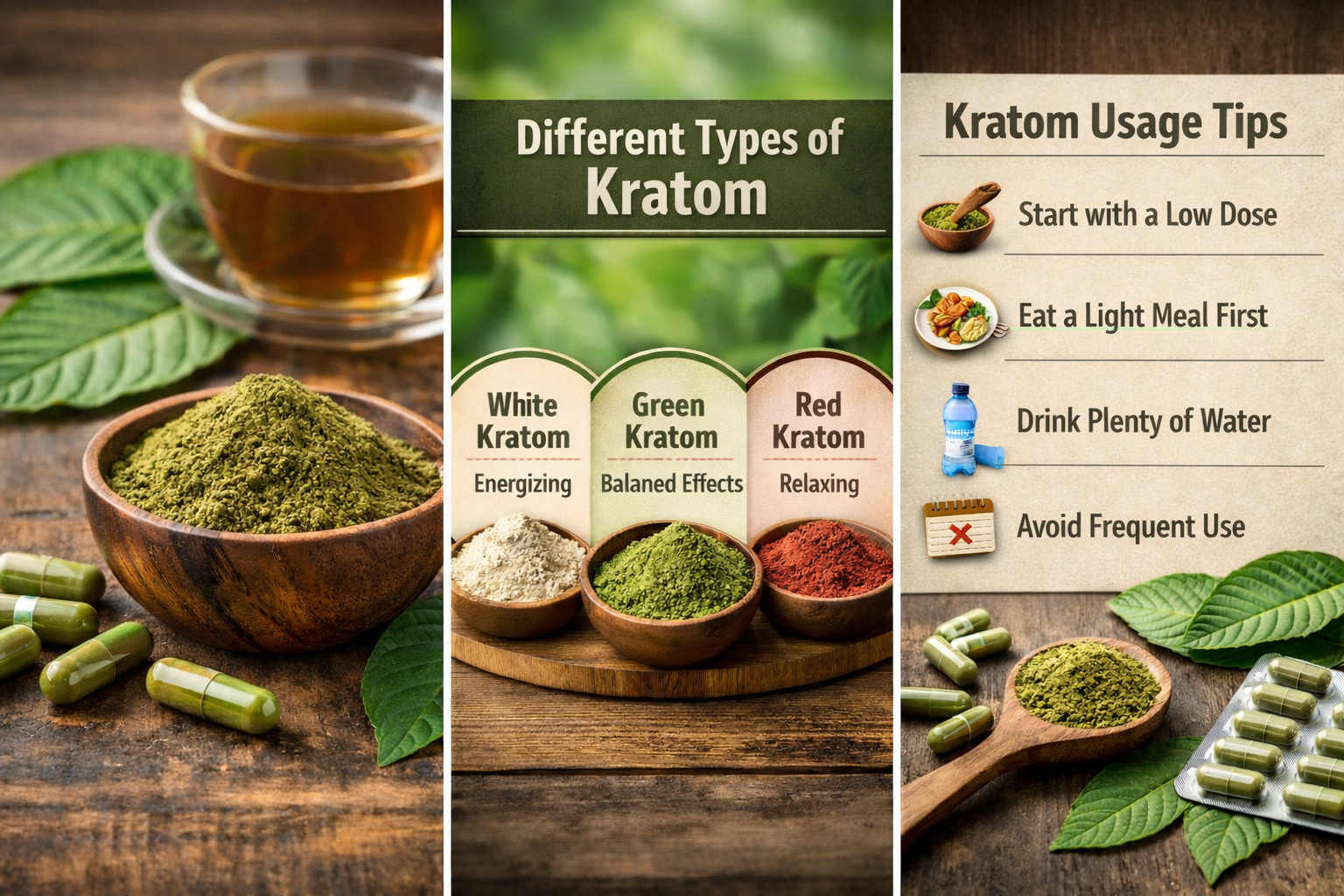
In addition, it is also important to know that there are three types of kratom: white, green, and red. They can produce subtly different effects:
- White is often stimulating.
- Green is more balanced.
- Red has a relaxing effect.
Why is dosage important with kratom?
Dosage is crucial with kratom because the line between desired effects and side effects is narrow. By taking the correct dose, you can prevent nausea and stomach discomfort. A dose that is too high often causes these side effects, as does taking kratom on an empty stomach. Moreover, paying close attention to dosage helps ensure the perfect balance between stimulation and relaxation. A dose that is too low may produce barely noticeable effects, while a dose that is too high can cause excessive sedation, euphoria, dizziness, or disorientation.
All in all, the correct dosage determines both the enjoyment and the safety of kratom. For beginners, it is therefore wise to start low and increase slowly.
How can you use kratom safely as a beginner?
Using kratom safely as a beginner is related to dosage, strain, method of use, timing, and personal factors:
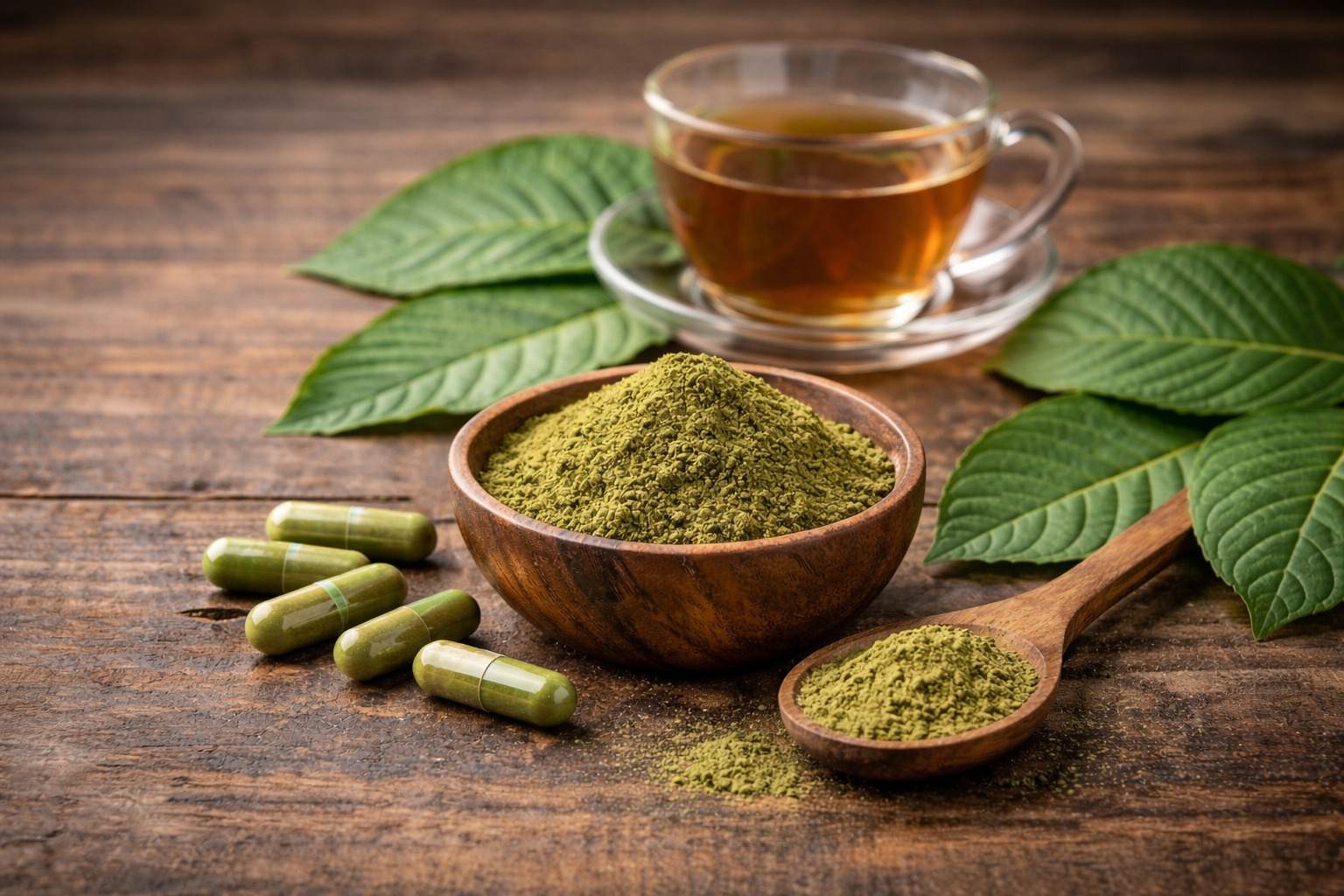
1. Start with a low dose
Start with 0.5 to 1 gram of powder and see how your body reacts to kratom. You can take more later if needed, but first wait 30 to 60 minutes to observe your body’s response.
2. Choose the right strain
As mentioned earlier, the three types of kratom have slightly different effects. Take this into account to determine which type best suits your wishes and needs. Generally, the green variety is considered the most suitable for beginners.
3. Use an appropriate method of administration
You can take kratom in various ways. The easiest method is to swallow the powder directly, but this can more quickly cause nausea and stomach irritation. Kratom capsules help prevent these complaints. You can also make kratom tea, which is often a good option for people with sensitive stomachs.
4. Pay attention to food and hydration
Reduce the risk of stomach discomfort by eating a light meal before taking kratom. Also drink plenty of water to prevent dehydration and headaches.
5. Start slowly and increase cautiously
It is advisable to start with a low dose. You may increase the dosage if needed, but always do so carefully and first observe the effects.
6. Limit frequent use
Do not use kratom daily, so that tolerance and dependence remain limited. Intermittent use, for example a few days per week, is more advisable.
Sources
- Neuropharmacology – The medicinal chemistry and neuropharmacology of kratom (2018)
- Bratislava Medical Journal – Pharmacology and toxicology of kratom (2023)
- Asian Journal of Psychiatry – Pharmacokinetics of mitragynine (2019)
Read more about kratom
Would you like to learn more about kratom, the different strains, and applications? Then check out our extensive kratom category page or blog: What is kratom and what are the effects?
Disclaimer:
This information is intended for educational purposes only and does not replace medical advice. Kratom may cause side effects and is regulated or prohibited in some countries. Consult a doctor or pharmacist if you have health complaints, use medication, or have doubts about safety.