

Medicinal cannabis for OCD: what does research say about its effects?
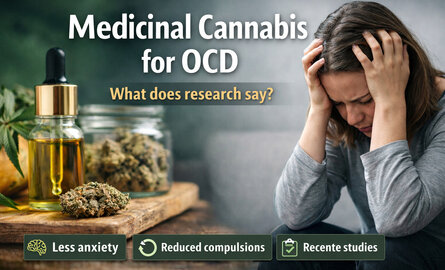
Medical cannabis can reduce anxiety, obsessive thoughts, and compulsive behaviors in some people with OCD. While standard treatments such as therapy and medication are often used, scientific research shows that cannabis may play a complementary role in improving quality of life.[1]
Medical cannabis is being investigated as a possible adjunctive treatment for OCD, particularly for people for whom conventional therapy is insufficient.
What is OCD and how is it treated?
Obsessive-compulsive disorder (OCD) is an anxiety disorder characterized by recurrent, unwanted thoughts (obsessions) and repetitive actions (compulsions). Common examples include compulsive hand washing or constantly checking that doors are locked.[3]
Approximately 1 to 3% of the population has OCD. The disorder is often accompanied by anxiety, sleep problems, low mood, and other mental health issues. Standard treatment usually consists of cognitive behavioral therapy and medications, such as SSRIs.
While these treatments can be effective, they don't work for everyone and can cause side effects. Many people continue to experience symptoms long-term, which explains the search for complementary or alternative treatments.
Why are researchers looking into medicinal cannabis for OCD?
Medical cannabis contains active ingredients like THC and CBD, which influence the endocannabinoid system. This system plays a role in regulating anxiety, mood, and stress responses, processes that can be disrupted in OCD.
Researchers are looking at medical cannabis for OCD because it may reduce anxiety and obsessive-compulsive symptoms via the endocannabinoid system.

Research on medical cannabis for OCD
In 2020, researchers at Washington State University analyzed data from the Strainprint app, which users used to track their cannabis use and symptoms. A total of 87 individuals were followed for 31 months, with approximately 1,800 recorded use episodes.
The study Acute Effects of Cannabis on Symptoms of Obsessive-Compulsive Disorder, published in the Journal of Affective Disorders, showed that users reported on average:
- 49% fewer unwanted thoughts
- 52% less anxiety
- 60% reduction in compulsive behavior
Products with a higher CBD concentration, in particular, were associated with a greater reduction in obsessive-compulsive symptoms.
Limitations of this study
The researchers emphasized that there was no placebo control group and that participants were self-selected. This means that the expectation effect may have played a role. Moreover, not everyone experienced the same benefits.
Recent clinical research on medical cannabis
In 2025, researchers affiliated with Drug Science published a large-scale study of more than 200 OCD patients in the United Kingdom.[2]
The research, published via MDPI, showed that after three months of using prescribed medical cannabis, participants reported a significant improvement in:
- quality of life
- anxiety and mood
- sleep quality
- general health
Most patients used THC-dominant strains and reported few to mild side effects.
Is medical cannabis safe for OCD?
Although the results While encouraging, researchers emphasize that medicinal cannabis is not suitable for everyone. Effects can vary from person to person.
Self-medication is not recommended. Always consult a doctor or specialist before considering medicinal cannabis.
Frequently asked questions about medicinal cannabis for OCD
Can medicinal cannabis cure OCD?
No. Cannabis is not a cure, but it may help alleviate symptoms.
Does medicinal cannabis get you high?
That depends on the product. THC can be psychoactive, CBD cannot.
Is medicinal cannabis legal?
Legislation varies by country. Always inquire about the current regulations in your region.
Conclusion
Medical cannabis is being increasingly investigated as a complementary treatment for OCD. Research suggests a potential reduction in anxiety and obsessive-compulsive disorders and an improved quality of life, but more clinical research is needed.
This blog is for informational purposes only and does not replace medical advice. If you have any complaints, always consult a general practitioner, psychologist, or specialist.
Curious about the best practices?hikbare medicinal cannabis strains? View the current offer via medicinal species.
Sources
- Juttler, J. et al. (2020). Acute Effects of Cannabis on Symptoms of Obsessive-Compulsive Disorder. Journal of Affective Disorders. PubMed
- Schlag, A. et al. (2025). Medicinal Cannabis Use Among People with Obsessive Compulsive Disorder:Changes in Quality of Life After Three Months. MDPI
- Brain Foundation. Obsessive-Compulsive Disorder (OCD). Hersenstichting