

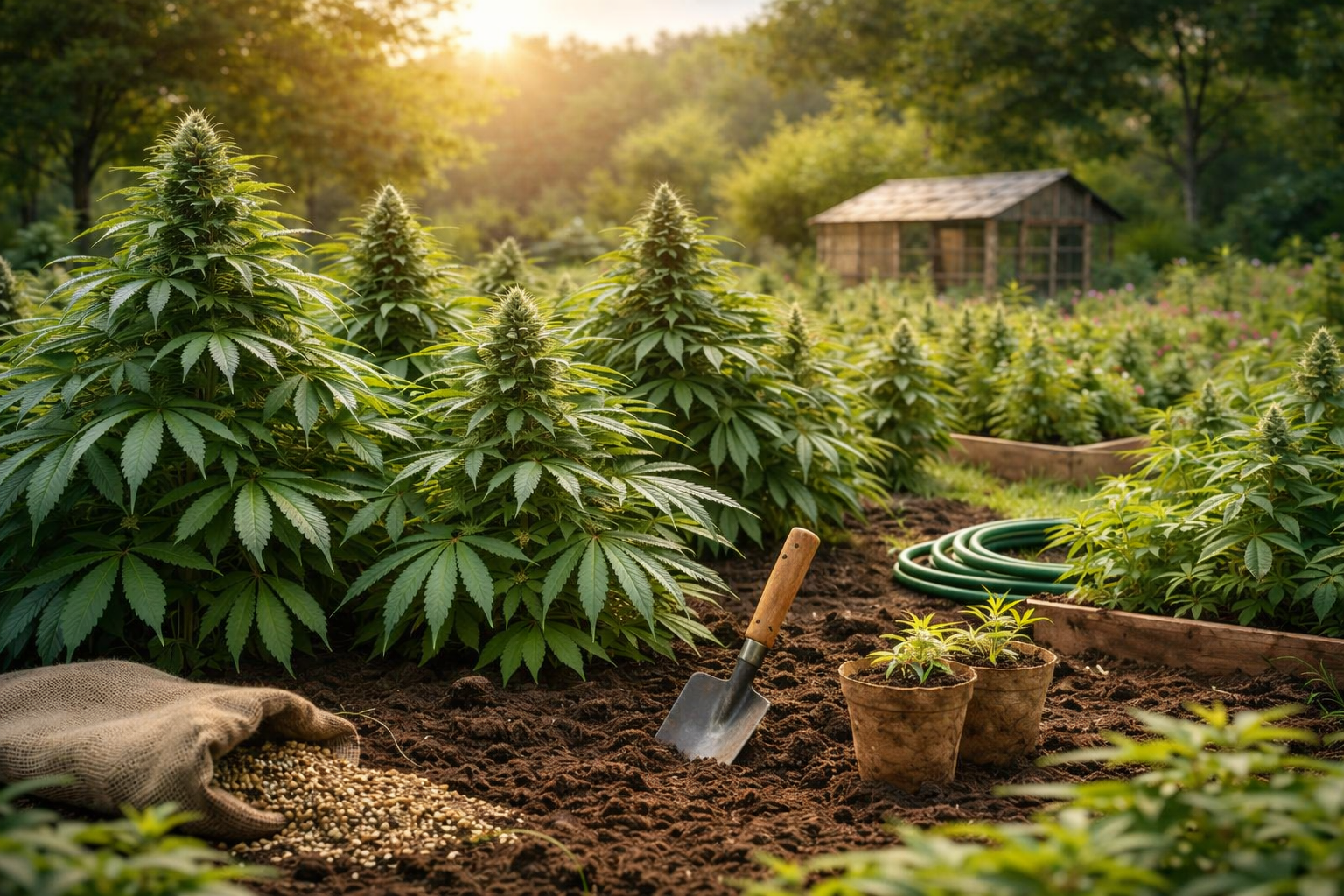
Growing cannabis outdoors with seeds: a beginner's guide
As the days grow longer and the feeling of spring fills the air, many people start thinking about their first outdoor grow. Growing cannabis outdoors is popular among beginners, but it can also feel a bit overwhelming if you have never planted before. Which seeds should you choose? How do you plant them? And what should you know about the season?
Growing cannabis outdoors starts with choosing suitable outdoor seeds and the right timing within the season. With proper preparation, outdoor growing can remain manageable and accessible, even for beginners.
In this blog, we explain step by step how to start growing cannabis outdoors from seeds. We focus on outdoor seeds that are suitable for outside conditions and provide practical information without unrealistic expectations. No medical claims, just straightforward guidance for anyone who wants to learn.
What does ‘growing cannabis outdoors’ mean?
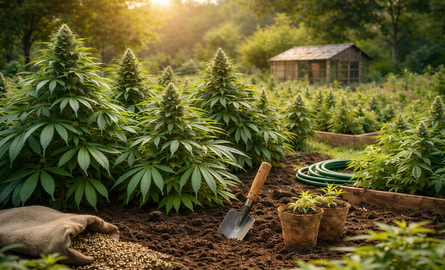
Growing cannabis outdoors means letting your plants grow outside — in open soil, containers, pots in the garden, on a balcony, or in a greenhouse. This is different from indoor growing with artificial lighting and climate control.
Outdoor growing benefits from sunlight, rain, and natural air circulation. This makes it appealing and relatively affordable for many beginners 1.
What not to expect
Outdoor growing is not exactly the same as indoor growing. You depend on nature, weather conditions, and the season. This requires timing, observation, and patience.
Where do outdoor cannabis seeds come from?
Outdoor cannabis seeds are specifically selected to perform well in changing outdoor environments. They are often more robust and less sensitive to wind, rain, or temperature fluctuations than some indoor varieties.
At Dr.Paddo, you can find a selection that matches these conditions: Top outdoor seeds
These seeds are intended for outdoor use, ideal for beginners or anyone starting their first grow.
What outdoor seeds are not
Outdoor seeds are not a guarantee of success. Even high-quality seeds still require proper care. The right climate, suitable soil, water, and attention are essential for healthy plant growth. No seed “grows itself”.
Why do people choose outdoor seeds?
People mention several reasons for choosing outdoor seeds:
Natural light and space
Plants receive unlimited sunlight, which plays an important role in normal plant growth and development 2.
Greater plant potential
Outdoor plants can often grow larger than indoor plants because they receive more space and natural light. If you prefer plants that do not grow above your fence, you may choose autoflower seeds suitable for outdoor conditions. These flower automatically and are not dependent on daylight hour changes. This helps keep them smaller compared to non-autoflower outdoor seeds, which only begin flowering when daylight hours decrease toward the end of summer.
Less equipment needed
No expensive lighting, ventilation, or climate control is required — outdoor growing uses what nature already provides along with a limited amount of growing equipment.
How it works: step by step
Step 1 — Choose your seeds
First, select outdoor seeds suitable for your climate and available space. Review descriptions regarding plant height, flowering time, and characteristics.
Step 2 — Prepare the soil
Good soil forms the foundation. Ensure light, nutritious soil. If needed, mix in organic compost or specialized potting soil to support early plant development.
Step 3 — Sowing or pre-growing
Outdoor seeds can be planted directly in the soil once the risk of frost has passed. In colder climates, many growers start germination indoors and transplant once temperatures rise.
Step 4 — Water and sunlight
Plants need water, but not overly wet soil. Regular watering in the morning is often ideal. Make sure plants receive at least 6–8 hours of direct sunlight per day.
Step 5 — Maintenance and monitoring
Check regularly for pests, leaf issues, or signs of stress. Outdoors, insects, wind, and rain are part of the environment — regular observation is important.
Step 6 — Flowering and harvest
Outdoor seeds grow in phases. After the vegetative stage, flowering occurs under natural light conditions. Always check the information related to the specific seed variety you choose, as flowering times may vary.
What science and experience suggest
Cannabis plants grow biologically similar to many herbs and vegetables: they require light, air, water, and nutrients. Research in plant physiology shows that sunlight plays a key role in photosynthesis, the process through which plants convert light into energy for growth 2.
What is a dose?
In the context of outdoor seeds, the word ‘dose’ does not refer to consumption but to the number of seeds and the level of care provided. Planting too many seeds in one place may create competition, so allow sufficient space between plants.
What should you pay attention to?
Weather conditions
Cold temperatures, frost, or unexpected rainfall may affect plant development. Review local seasonal patterns before planting.
Legislation
Always check local regulations. Home cultivation may be subject to restrictions depending on your country or region.
Frequently asked questions
When should I plant outdoor seeds?
Once the risk of heavy frost has passed, usually in late spring (May).
How much sunlight do outdoor cannabis plants need?
At least 6–8 hours of direct sunlight per day.
Can I grow on a balcony?
Yes, outdoor seeds can grow in containers or pots as long as they receive sufficient sunlight and airflow.
What if I notice problems?
Some issues may require adjustments such as watering, soil quality, or pest management. Observe carefully and adapt your care routine when needed.
Related
Sources
- University of California Agriculture & Natural Resources — Plant Biology basics
- Cannabis cultivation basics – general plant science
Disclaimer
This information is intended for educational purposes only. Always check the laws and regulations in your country or region before purchasing or using cannabis seeds. Results may vary and no guarantees are provided. This is not medical advice.